CBT-I is highly effective, but successful treatment often depends on more than simply following the protocol. This case example explores how individualizing CBT-I to address anxiety, perfectionism, chronic stress, and attentional processes can lead to meaningful improvements in both sleep and daytime functioning.
by Brian Curtis, PhD, DBSM
When CBT for insomnia (CBT-I) “doesn’t work,” it’s often not the protocol. It’s the lack of individualization.
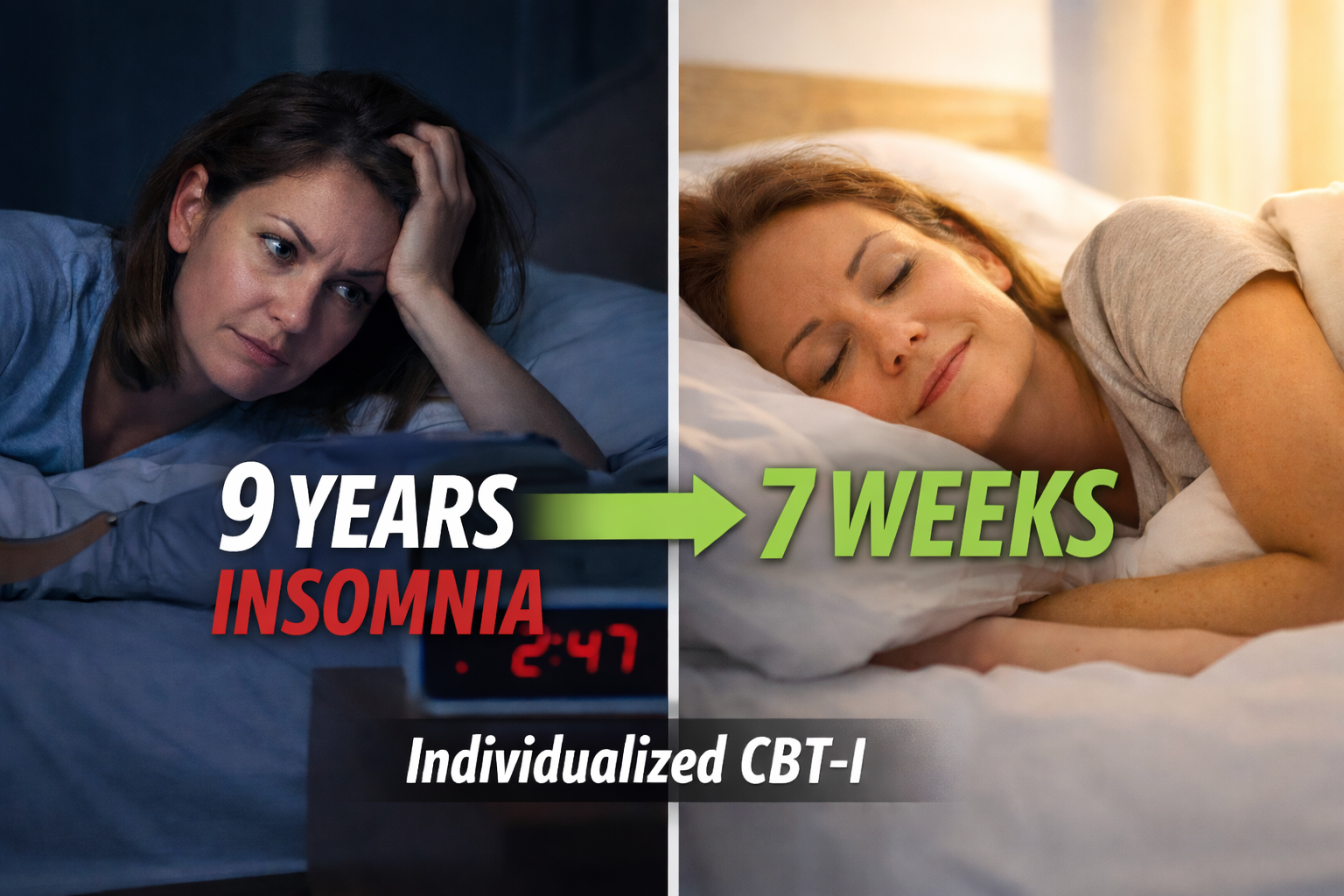
A client I recently worked with had a 9-year history of sleep maintenance insomnia.
She averaged ~5.5 hours of sleep per night & spent ~70 minutes awake in the middle of the night.
We completed one assessment session + 7 weekly individualized CBT-I sessions.
Here were the outcomes:
• Wake After Sleep Onset: 70 minutes → 11 minutes
• Total Sleep Time: 5 hours 30 minutes→ 7 hours 4 minutes
• Sleep Efficiency: 79% → 91%
• Sleep Quality: 1.8/4 → 3.1/4
• Nightly THC (~3 mg) for sleep → Eliminated
• GAD-7: 19/21 (severe anxiety) → 7/21 (mild anxiety)
A key part of the work involved individualizing CBT-I to the processes maintaining this individual’s insomnia.
In addition to core behavioral components, treatment targeted:
• Scheduled daily problem-solving time (not scheduled worry time, that's another soapbox for another time!) to directly target their comorbid generalized anxiety disorder & chronic stress
• Mindfulness and cognitive defusion practices combined with relaxation skills targeting reported perfectionism & over scheduling each day
• Reducing chronic multitasking to improve reported difficulties with attention & feelings of being overwhelmed
The client reported that reducing daytime anxiety & attentional difficulties significantly improved their feelings of restoration, clarity, & overall wellbeing, which in turn supported their sleep improvements.
CBT-I is one of the most effective behavioral treatments in all of medicine.
But in clinical practice, its power often comes from tailoring the core behavioral + cognitive principles to the individual sitting in front of you.
In the era of digital CBT-I & increasingly standardized delivery, many clients conclude that “CBT-I didn’t work for me.”
Sometimes the issue is simply that the treatment wasn’t sufficiently individualized to their unique presentation, comorbid difficulties, & treatment goals.
